Mead Family Dental



Teeth are incredibly strong. They help you chew, speak clearly, and smile confidently every day. However, when something breaks, such as a cavity or a chipped edge, many people wonder whether the tooth will heal on its own.
It’s one of the most common questions patients might ask during routine visits: Do teeth heal as skin or bones do? Realizing how teeth respond to damage can help you take the correct steps early and prevent major dental problems down the line. In this blog, you will learn how much your teeth can heal by themselves and when to seek professional assistance.
Why Teeth Can’t Fully Heal Themselves?
Your body has an incredible capacity to heal many tissues. Skin regenerates. Bones mend after fractures. However, teeth are different.
The hardest substance in the body, enamel, forms the outside of a tooth and contains no living cells. As a result, once enamel is damaged, the body cannot regenerate it. This is one reason people often question why teeth don’t heal on their own, unlike other tissues.
Within the tooth is dentin and pulp. These layers also contain nerves and blood vessels. They can respond to irritation or minor damage by forming some protective response. However, that reaction can’t restore enamel or repair cracks entirely. Therefore, dental problems need to be treated by a dentist.
How Dental Procedures Can Restore Damaged Teeth
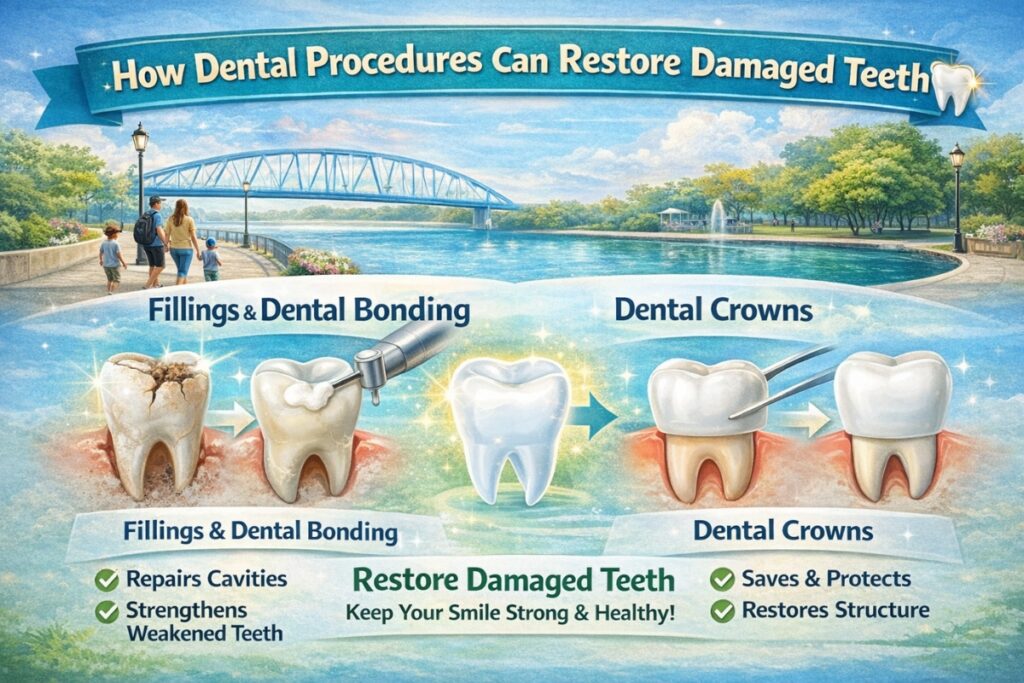
Restorative care helps to restore the strength of weakened teeth due to decay, cracking, or fracturing.
This treatment may also include fillings, protective restorations, or dental bonding in Saginaw. For more serious structural damage to a tooth, stronger reinforcement may be required.
This is when dental crowns in Saginaw are utilized to save a weakened tooth and restore its shape. A crown covers the visible part of the tooth and helps prevent any further fractures or structural breakdown.
The majority of visitors to the Saginaw Riverwalk, or those spending time on Ojibway Island, depend on restorative care to save their teeth. This ensures they are strong enough for daily meals and activities.
Does Minor Tooth Damage Go Away on Its Own?
Some early tooth issues might get stabilized or slow down on their own. This is where people often get confused when they ask why teeth can’t repair themselves.
Remember, enamel can undergo remineralization. Saliva and fluoride can help strengthen damaged enamel and prevent early damage from worsening.
However, remineralization is only effective in very early stages. Once a cavity’s been made or an enamel is missing, the tooth does not regain the structure it lost.
That requires professional treatment to restore the tooth’s strength and function.
The Truth About Healing Cavities Naturally
A lot of people have this question: Can cavities heal naturally? The answer is simple: It depends on the stage of your cavity.
During the very first stage, when a cavity is developing as a tiny white spot on the enamel, remineralization may help strengthen the tooth. Good oral care, fluoride, and balanced nutrition can slow down the destruction.
Once decay penetrates the enamel and creates a cavity in the tooth, it will not heal on its own. At this point, it is necessary to treat the tooth in order to remove decay and protect the remaining tooth structure.
What Does It Mean When a Tooth Cracks?
Dental cracks are more common than people think. They can form from biting down on hard foods, grinding teeth while sleeping, or drastic temperature changes.
Unlike small patches of demineralized enamel, fractures cannot naturally heal. The aversion may subside in the meantime, even while that weakness behind the scenes remains.
Left untreated, cracks can deepen over time and become more severe. This may then lead to chewing sensitivity or pain.
Suggest protective treatments to prevent further damage.
Signs That Your Teeth Damage Requires Care
Not every tooth issue is painful right then and there. Many problems are gradual and worsen over time.
Look out for these frequent warning signs:
- Mild pain on biting or chewing, usually localized to a single tooth
- Lingering sensitivity to hot, cold, or sweet foods after eating
- Cracks or chips visible on the surface of a tooth
- Dark spots or holes that might signal a cavity
- Jagged edges or uneven tooth surfaces after biting down on something hard
- Sensitivity when drinking cold water all of a sudden
If they do, the tooth needs to be checked before any further damage occurs.
Daily Practices That Preserve Your Teeth
Though teeth can’t completely heal on their own, good daily habits can defend against further damage and help prevent problems from developing.
Consider these important habits:
- Brush twice a day with fluoride toothpaste to help strengthen the enamel.
- Use dental floss to remove plaque that accumulates between your teeth.
- Restrict sugary beverages and snacks that feed cavity-causing bacteria.
- Drink enough water, especially after a meal.
- Steer clear of chewing ice or hard candies that can shatter teeth.
- If you suffer from nighttime tooth grinding, wear a night guard.
These habits protect your enamel and can help prevent cavities or cracks.
When Restorative Protection Becomes Necessary
In some cases, tooth damage reaches a point where protection is crucial for the tooth to be saved. Dentists often advise patients to get dental crowns in Saginaw when decay has removed a substantial amount of the tooth or when a crack is jeopardizing the tooth’s structure.
Crowns provide strength whilst keeping the underlying remaining tooth intact.
For most of those people strolling through Hoyt Park or taking in events at the Dow Event Center, keeping their teeth healthy means tending to damage early, before it interrupts their ability to eat every day.
How Early Care Can Prevent Larger Dental Issues
One of the biggest misconceptions about dental health is waiting until you’re in pain to seek care. Many dental issues begin silently. A tiny crack or early cavity might not yet be symptomatic, but the harm can eventually go deeper into the tooth.
Prevention means treating problems before they become too serious. It also preserves more of the natural tooth structure. Routine visits to the dentist can catch problems before they worsen.
Rebuilding Strength and Preserving Your Smile
It’s too long to wait for a damaged tooth to heal naturally. Teeth simply don’t have the biological capacity to grow back enamel or mend structural fissures. Patients at Mead Family Dental will be thoroughly evaluated to determine the best way to protect and restore weakened teeth.
If you do recognize sensitivity, cracks, or signs of decay, a visit can help identify the problem and prevent it from spreading. Call us to schedule an appointment to know how restorative procedures can strengthen your tooth and help you keep your healthy, confident smile.
Questions People Ask About Tooth Recovery
Can a small cavity heal naturally without treatment?
A cavity that has already formed cannot repair itself. The tooth structure has already been permanently damaged. Dental treatment removes the decayed portion and restores the tooth with a filling to stop the damage from spreading further.
Can cracked teeth repair themselves over time?
Teeth cannot fuse back together once they crack. The fracture may remain stable for a while, but chewing pressure often worsens it. Dental treatment helps stabilize the tooth and prevents more serious structural damage.
What is the difference between remineralization and healing?
Remineralization strengthens weakened enamel before a cavity forms. Minerals from saliva and fluoride restore microscopic damage. True healing, however, would mean rebuilding lost tooth structure, which teeth cannot do once enamel is broken.
How do dentists determine if a tooth can be saved?
Dental professionals examine the tooth visually and may take diagnostic images to see how deep the damage goes. If the structure remains strong enough, treatments like fillings, bonding, or crowns can restore the tooth.
Can tooth sensitivity go away without treatment?
Mild sensitivity caused by enamel wear may improve if the tooth is protected and strengthened. However, persistent sensitivity often signals decay, cracks, or exposed dentin, all of which require professional evaluation.
What happens if a damaged tooth is ignored?
Untreated damage usually worsens over time. Cavities deepen, cracks widen, and bacteria may eventually reach the pulp. Early treatment protects the tooth and prevents infection or more complex procedures later.